Tuesday, May 01, 2007

A Letter from C. S. Lewis

A letter from C.S. Lewis to his best friend, Arthur Greeves, written when Lewis was seventeen:

I have had a great literary experience this week. I have discovered yet another author to add to our circle--our very own set: never since I first read 'The well at the world's end' have I enjoyed a book so much--and indeed I think my new 'find' is quite as good as Malory or Morris himself. The book, to get to the point, is George Macdonald's 'Faerie Romance', Phantastes which I picked up by hazard in a rather tired Everyman copy [...]. At any rate, whatever the book you are reading now, you simply MUST get this at once: and it is quite worth getting in a superior Everyman binding too.

Of course it is hopeless for me to try and describe it, but when you have followed the hero Anodos along that little stream to the faery wood, have heard about the terrible ash tree and how the shadow of this gnarled, knotted hand falls upon the book the hero is reading, when you have read about the faery palace--just like that picture in the Dulac book--and heard the episode of Cosmo, I know that you will quite agree with me. You must not be disappointed at the first chapter which is rather conventional faery tale style, and after it you won't be able to stop until you have finished. There are one or two poems in the tale--as in the Morris tales you know--which, with one or two exceptions are shockingly bad, so don't TRY to appreciate them: it is just a sign, isn't it of how some geniuses can't work in metrical forms--another example being the Brontes.

I quite agree with what you say about buying books, and love all the planning and scheming beforehand, and if they come by post, finding the neat little parcel waiting for you on the hall table and rushing upstairs to open it in the privacy of your own room. Some people--my father for instance--laugh at us for being so serious over our pleasures, but I think a thing can't be properly enjoyed unless you take it in earnest, don't you? What I can't understand about you though is how you can get a nice new book and still go on stolidly with the one you are at: I always like to be able to start the new one on the day I get it, and for that reason wait to buy it until the old one is done. But then of course you have so much more money to throw about than I.

Talking about finishing books, I have at last come to the end of the Faerie Queene: and though I say 'at last', I almost wish he had lived to write six books more as he hoped to do--so much have I enjoyed it.

[C.S. Lewis, The Collected Letters of C.S. Lewis: Volume I, Letter of 7 March 1916]

Labels:

Posted by Nicole Bianchi at 11:03 AM |

Monday, April 02, 2007

Home Thoughts, from Abroad

O, TO be in England
Now that April 's there,
And whoever wakes in England
Sees, some morning, unaware,
That the lowest boughs and the brushwood sheaf
Round the elm-tree bole are in tiny leaf,
While the chaffinch sings on the orchard bough
In England—now!

And after April, when May follows,
And the whitethroat builds, and all the swallows!
Hark, where my blossom'd pear-tree in the hedge
Leans to the field and scatters on the clover
Blossoms and dewdrops—at the bent spray's edge—
That's the wise thrush; he sings each song twice over,
Lest you should think he never could recapture
The first fine careless rapture!
And though the fields look rough with hoary dew,
All will be gay when noontide wakes anew
The buttercups, the little children's dower
—Far brighter than this gaudy melon-flower!

Robert Browning

Labels:

Posted by Nicole Bianchi at 10:46 PM |

Saturday, March 17, 2007

William Wordsworth's "Preface to Lyrical Ballads"


In 1798, William Wordsworth and Samuel Taylor Coleridge (two of the leading poets of the Romantic literary movement in England) published a volume of their poems entitled Lyrical Ballads. To the first edition Wordsworth attached an “Advertisement” that briefly explained the purpose of the poems. By the third edition, however, this “Advertisement” had developed into a much longer Preface or, rather, a sort of “revolutionary manifesto about the nature of poetry” (Norton Anthology of English Literature, pg. 1495). It is revolutionary because Wordsworth crafted it around three main ideals borrowed from the French Revolution – immortalized in that war’s infamous rallying cry, “Liberté, égalité, et fraternité ou la mort!” This liberty, equality, and fraternity (brotherhood) form the basis of Wordsworth’s treatise, a treatise that forever transformed the role of the poet and his poetry.

What is liberty? The French Revolutionaries saw it as a freedom from a despotic regime. To many, it probably meant a complete abolition of all forms of government and a descent into anarchy. The philosophy that influenced the Revolution, however, was much more complex. In 1762, Jean-Jacques Rousseau, an Enlightenment philosopher, summed it up nicely in his Social Contract with the phrase, “Man is born free; and everywhere he is in chains” (The Social Contract, 387). Thirty-two years later, William Blake used this same phrase as inspiration for a line in his poem “London” that speaks of “mind-forged manacles.” Rousseau and Blake saw man as negatively affected by his environment. Primitive man living in nature is perfect, a noble savage, because evil does not come from nature, but from organized society. Wordsworth embraces this belief in his Preface, attempting to show that poetry can be a path towards the liberation of mankind; that is, towards equality and brotherhood. For his poems, he chose subjects from “low and rustic life” because,
In that condition, the essential passions of the heart find a better soil in which they can attain their maturity, are less under restraint, and speak a plainer and more emphatic language; because in that condition of life our elementary feelings co-exist in a state of greater simplicity (Preface to Lyrical Ballads, 1499).

Using images from “the beautiful and permanent forms of nature” (1498), Wordsworth tries to guide his reader back to man’s primitive and perfect state, releasing him from his mind-forged manacles.

This liberation leads to an equality of all men; something desperately hungered after by the peasants who stormed the Bastille after suffering many years under the oppression of the aristocracy. Wordsworth sees this equality, however, not as an equality of class, but as “the very language of men” (1500), a universal tongue, echoing the eleventh chapter of Genesis in which the whole world had one language. Showing that poetry can be used to return to this equality, Wordsworth exemplifies the role of the poet, writing, “He is a man speaking to men: a man it is true, endued with more lively sensibility, more enthusiasm and tenderness, who has a greater knowledge of human nature, and a more comprehensive soul” (1502). The poet is a “translator” for mankind and poetry is “the image of man and nature” (1503). Poetry can appeal to all people and the poet has no restrictions on the truth which he tries to convey. Wordsworth explains,
The poet writes under one restriction only, namely, that of the necessity of giving immediate pleasure to a human being possessed of that information which may be expected from him … as a man (1503).

This equality of speech between one man and another leads to the final element of the Revolutionary philosophy: the brotherhood of mankind. After the Revolution, the French strongly emphasized this ideal by calling each other ‘citizen,’ highlighting their common bond. For poetry, Wordsworth explains that the “poet, singing a song in which all human beings join with him, rejoices in the presence of truth as our visible friend and hourly companion” (1504). The universal language that Wordsworth previously spoke of is founded on two principles: passion and knowledge. All human beings have experienced love, anger, fear, and happiness. They have also witnessed the universal order and truth of nature. Because of this, Wordsworth believes that
In spite of difference of soil and climate, of language and manners, of laws and customs, in spite of things silently gone out of mind and things violently destroyed, the poet binds together by passion and knowledge the vast empire of human society, as it is spread over the whole earth, and over all time (1505).

This philosophy of the role of the poet and poetry seems to echo the words that Samuel Johnson had penned years before in his novel Rasselas when he spoke of the poet rising to general and transcendental truths as “the interpreter of nature and the legislator of mankind” (Rasselas, 1235). Yet, instead of merely offering a short chapter on this topic as Johnson did, Wordsworth expanded the beliefs and supported them with Enlightenment inspired Revolutionary thinking. Because of this, Preface to Lyrical Ballads laid the foundations of a new poetic genre – Romantic poetry, indeed, was unlike any poetry that had been written before, creating a revolution of imagination and embracing ‘the spirit of the age.’

Works Cited

Johnson, Samuel. Rasselas. 1759. The Norton Anthology of English Literature: The Major Authors. Stephen Greenblatt, General Editor. 8th edition. New York: W. W. Norton & Company, Inc., 2006

Wordsworth, William. Preface to Lyrical Ballads. 1802. The Norton Anthology of English Literature: The Major Authors. Stephen Greenblatt, General Editor. 8th edition. New York: W. W. Norton & Company, Inc., 2006

Rousseau, Jean-Jacques. The Social Contract. 1762. Great Books of the Western World. Robert Maynard Hutchins, Editor in Chief. Encyclopedia Britannica, Inc., 1952.

Labels: ,

Posted by Nicole Bianchi at 9:50 PM |

Thursday, March 15, 2007

Movie Reviews

Posted by Nicole Bianchi at 8:34 PM

Tuesday, January 30, 2007

The Darkling Plain

[An Explication of Matthew Arnold’s "Dover Beach"]


The sea is calm to-night.
The tide is full, the moon lies fair
Upon the straits; on the French coast the light
Gleams and is gone; the cliffs of England stand;
Glimmering and vast, out in the tranquil bay.
Come to the window, sweet is the night-air!
Only, from the long line of spray
Where the sea meets the moon-blanched land,
Listen! you hear the grating roar
Of pebbles which the waves draw back, and fling,
At their return, up the high strand,
Begin, and cease, and then again begin,
With tremulous cadence slow, and bring
The eternal note of sadness in.

Sophocles long ago
Heard it on the Ægean, and it brought
Into his mind the turbid ebb and flow
Of human misery; we
Find also in the sound a thought,
Hearing it by this distant northern sea.

The Sea of Faith
Was once, too, at the full, and round earth's shore
Lay like the folds of a bright girdle furled.
But now I only hear
Its melancholy, long, withdrawing roar,
Retreating, to the breath
Of the night-wind, down the vast edges drear
And naked shingles of the world.

Ah, love, let us be true
To one another! for the world, which seems
To lie before us like a land of dreams,
So various, so beautiful, so new,
Hath really neither joy, nor love, nor light,
Nor certitude, nor peace, nor help for pain;
And we are here as on a darkling plain
Swept with confused alarms of struggle and flight,
Where ignorant armies clash by night.


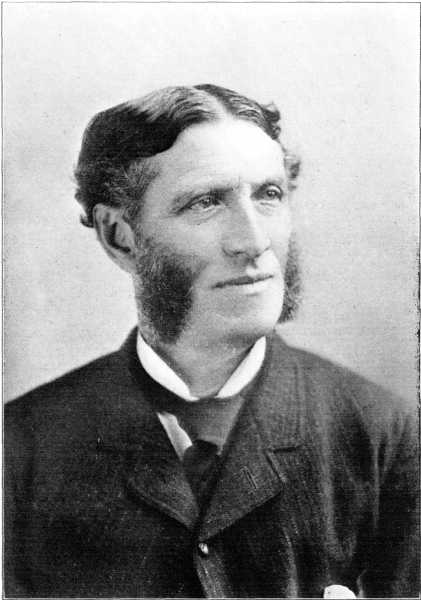
During his honeymoon in 1851, Matthew Arnold visited Dover, England. As he strolled along the beach with his wife, he probably paused to listen to the roar of the English Channel, its waves driven wildly against the shore, or to stare up at the vast white chalk cliffs dominating the coastline. This visit would later serve as inspiration for his poem “Dover Beach.” The poem describes a man’s personal loss of faith, exemplifying the contrast between a time when religion was embraced without question and the modern Victorian age that introduced doubt and atheism.

Arnold believed that his poems would eventually “have their day” because they represented “the main movement of mind” of the Victorian world. Although certainly one of the reasons why he gained prominence, Arnold was also a masterful poet, able to create striking pictures with words. “Dover Beach” begins with such a picture of the calm sea, “the tide is full, the moon lies fair / upon the straits” and “the cliffs of England stand, / Glimmering and vast, out in the tranquil bay” (“Dover Beach”, 2-5). It is not only a picture of Dover, however, but of the whole of England. The British Empire had its height in the Victorian age. England, glorious and powerful, dominated much of the world. Yet in this peaceful scene, suddenly, a “grating roar” is heard “of pebbles which the waves draw back, and fling, / at their return, up the high strand” (10-11). The tranquility of the night has been disturbed by this wild noise: the pebbles symbolize new opinions (for instance, Darwin’s theories on evolution) that are flooding the philosophical spectrum and undermining the Christian worldview. Arnold does not question their veracity, but he admits that they bring “the eternal note of sadness in” (14).

This sound is not new to England, however. Arnold describes Sophocles also hearing it long ago on the Ægean, referring to a passage from Antigone. It is the sound of “human misery” (18), the constant war of differing thoughts and opinions that occurs in any age, country, or culture. Arnold believes nature can be used to discover truths about the world and the sea gives him, like Sophocles, a “thought” (19) that tries to solve this war in his mind. Yet it can hardly offer him a solution. Instead, it reminds Arnold of religion and he compares the real sea to “The Sea of Faith” (21).

This Sea, unlike the sea of nature, can offer man satisfaction for the turmoil in his soul. Indeed, once “at the full, and round earth’s shore” it “lay like the folds of a bright girdle furl’d” (22-23). It is unclear here whether Arnold is referring to a time period (such as the medieval age) or simply to a previous time in his life when Christianity was accepted with absolute conviction and no uncertainty. Whichever the case, when it was accepted, his life did not experience such dark sadness and fear. As he watches his religious beliefs shattered by the new beliefs of the day (beliefs that question the existence of God and the origins of man), he can only hear The Sea of Faith’s “melancholy, long, withdrawing roar, / Retreating, to the breath / Of the night-wind” (25-27). Without Christianity, the world is left naked and forbidding.

Arnold argues, however, that The Sea of Faith was actually a delusion. In reality, the world has “really neither joy, nor love, nor light, / nor certitude, nor peace, nor help for pain” (32-33). Because Christianity offered these things to Arnold, it must have been false. Arnold has become a nihilist. According to the Merriam Webster dictionary, nihilism is a viewpoint that “traditional values and beliefs are unfounded and that existence is senseless and useless,” denying “any objective ground of truth and especially of moral truths.” He has no way to decide between the warring philosophies because there is no ultimate standard to judge them against. Searching wildly for a solution to this dilemma, Arnold insists on crying out to his “love” (though in the next breath he denounces any love in the world), declaring, “let us be true / to one another!” (29-30). But how can they be true when there is no truth in the world? How can they love one another when love is only a delusion?

No answer is found for these questions. He ends the poem on a note of sorrow, unable to resolve the turmoil in his soul. Instead, he describes himself as on a “darkling plain / Swept with confused alarms of struggle and flight, / Where ignorant armies clash by night” (35-37). For the nihilist, the world is in a constant state of war. Fear and despair are its only realities. Arnold seeks desperately to find a shred of happiness that is not a fantasy, but this fights against his own philosophy. Vainly, he attempts to create a substitution for the relationship between God and man, appealing to his fellow man for help. “Let us be true!” he begs, but they have nothing to guide them, no foundation on which to protect such a relationship – the world is hostile, religion is dead, and nature can give them no answers.
Arnold refused to call himself an atheist, hiding in the supposed comforts of agnosticism, refusing to believe in either the existence or the nonexistence of God. Yet, he rejected religion as superficial, blinding to true reality. “Dover Beach” may, in fact, be his only writing that conceded religion was an answer to chaos in the world: it was deceptive, but it did offer relief and a feigned security. However, Arnold insisted on freeing himself from this self-delusion and wallowing in the despair and darkness of the real world. Nevertheless, the Bible is clear that Arnold has actually thrown away reality for the self-delusion. In Romans, Paul wrote that sinful men “suppress the truth in unrighteousness” (Romans, I.18). Further, “they [become] futile in their speculations, and their foolish hearts [are] darkened. Professing to be wise, they [become] fools” (I.21-22). Arnold believed a world of happiness and peace must be a delusion and embraced what he thought was a reality of misery and horror. Indeed, to the unbeliever it is their reality – a “darkling plain” where fools will fight to reject God and hide from the light and truth.

Labels: , ,

Posted by Nicole Bianchi at 8:39 PM |

Saturday, January 13, 2007

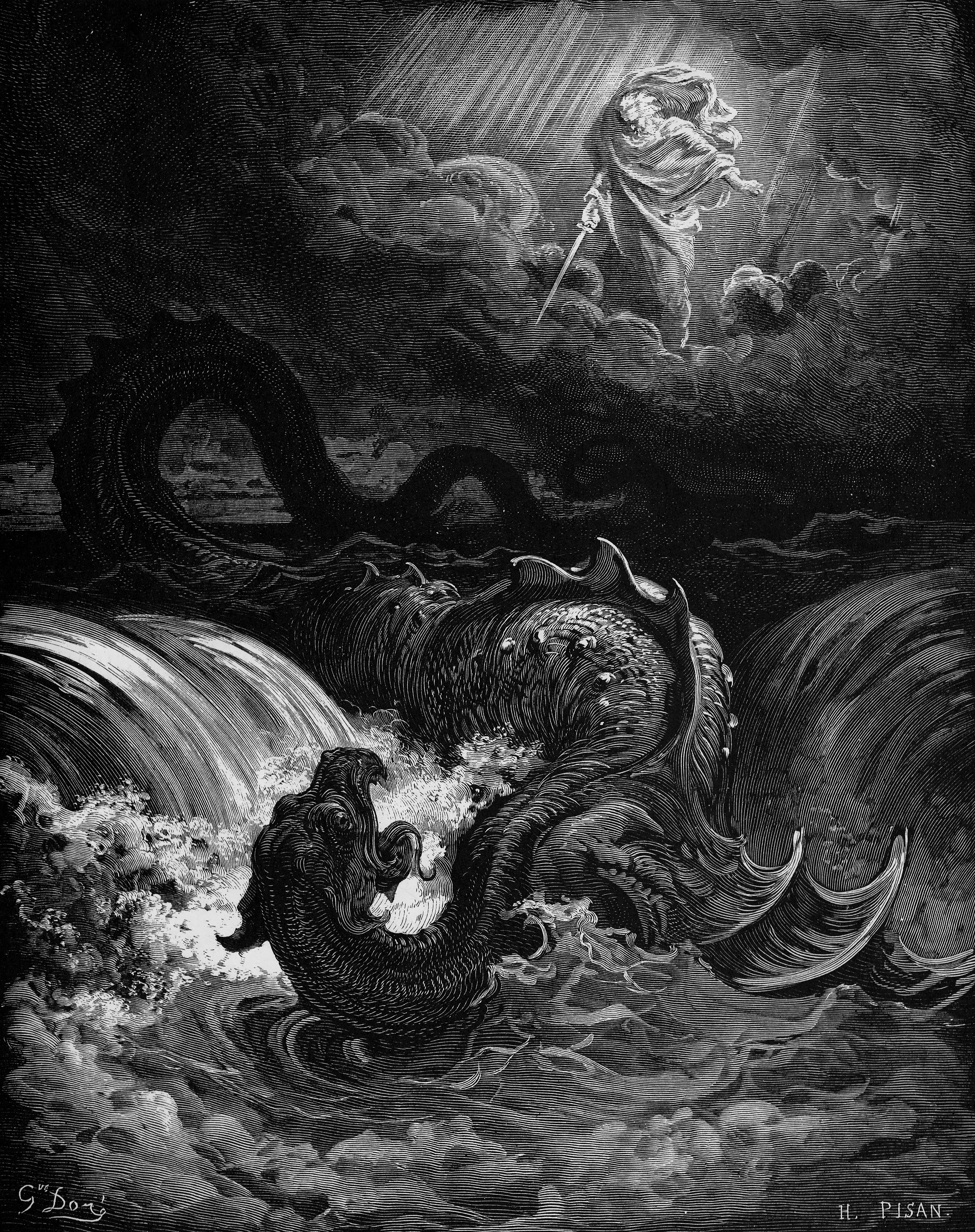
Lucifer's Fall

[I wrote this poem several weeks ago after studying poetry in my Brit Lit class. It's in the style of a Shakespearean Sonnet and was inspired by John Milton's Paradise Lost and texts from Isaiah and Revelation.]

Isaiah 14:12

How you have fallen from heaven,
O morning star, son of the dawn!
You have been cast down to the earth,
you who once laid low the nations!


Fallen art thou, son of the bright flamed morn,
With thy dragon’s black tail swept down the stars,
Burning, blazing, blaring into Hell born,
Never to ride skyward after these wars.
Why did thou forsake lofty light-realms to
Perish in a cursed tract of Hades?
And why strive vain against Him always true,
Baring thine heart to this wild disease?
Curséd art thou of all His creatures made,
For once thou strike the heel of His blessed Son –
Arise, Firstborn! And let all be afraid,
Heavens quake until victory is won.
This foul false serpent crush under Thy feet,
Lucifer Hell-chained in final defeat.

Labels: ,

Posted by Nicole Bianchi at 1:12 PM |

Thursday, January 11, 2007

A Review of "A Modest Proposal"

[To start my new adventures with this blog, I would like to post an essay I recently wrote for my British Literature class.]

Go here to read "A Modest Proposal."

Swift's Great Satire

Satire has existed as far back as ancient Rome (indeed, tradition says that Quintilian, a Roman rhetorician, coined the term), but it was not until the 18th century that it became a true literary genre. This period saw the emergence of such literary giants as Alexander Pope, John Dryden, and Voltaire, all brilliant satirists. Jonathan Swift (1667-1745) surpassed them all, however, considered by many the greatest prose satirist in the English language. Satire is a literary work that holds up human vices and follies to ridicule or scorn, often employing irony and sarcasm. Swift's short pamphlet “A Modest Proposal” is an excellent example of his superb use of the genre. The piece addresses the Irish famine, attempting to offer a solution for the thousands of starving Irish children. Utilizing three types of persuasion borrowed from Aristotle’s Rhetoric, Swift makes the piece quite convincing, luring the unsuspecting reader to agree with the author’s basic premises before revealing his shocking conclusions – yet, though a satiric seriousness does pervade the work, a true sincerity and earnestness is at the heart of “A Modest Proposal.”

The Irish Famine of 1740 to 1741 refers to the Irish people, rather than Ireland itself. The island was rich with produce and animals; only the crops (mostly potatoes) of the peasant farmers suffered a poor harvest. The English absentee landlords fed off the abundance of the land and starved the Irish citizens to death. One historian, John Mitchell, remarked, “A million and a half men, women and children were carefully and peacefully slain by the English Government. They died of hunger in the midst of abundance, which their own hands created.” Many people wrote pamphlets to expose the ruthlessness of the English and the desperate state of the Irish or to offer different schemes to ease the poverty of thousands and make them useful to the public. With his own satiric pamphlet, Swift joined these writers, employing the first type of Aristotle’s persuasion, “ethos.” Ethos refers to the credibility of the author. By grouping himself with these other writers, Swift shows that he is embarking on a good cause. In the opening title of his piece, he explains that he wishes to prevent the children of Ireland from being a “burden to their parents” and hopes to make them “beneficial to the public” (“A Modest Proposal,” 1114). Not only, however, does he have England in mind, but he also considers the welfare of the children – with his plan they will not want “food and raiment for the rest of their lives” (1114). He also declares that he wishes to end “voluntary abortions” in which women murder their own children (1115). His reasons for his plan at first appear anything but harmful.

To further support the integrity of his schemes, Swift uses the second type of Aristotelian persuasion, “pathos.” Describing the suffering of the Irish in his opening paragraph, he appeals to human emotion, trying to awaken pity and compassion. He calls it a “melancholy object” to walk through Dublin or travel in the countryside and behold the “beggars of the female sex, followed by three, four, or six children, all in rags and importuning every passenger for alms” (1114). When speaking of the mothers who are forced to murder “the poor innocent babes,” he says it is not for shame, but because they cannot provide for their own children; indeed, the very sight of the starving infants would “move tears and pity in the most savage and inhuman breast” (1115). Yet, in the midst of wringing pity from his audience, Swift suddenly reveals his own scheme for allaying the Irish suffering. He announces,

I have been assured by a very knowing American of my acquaintance in London, that a young healthy child well nursed is at a year old a most delicious, nourishing, and wholesome food, whether stewed, roasted, baked, or boiled; and I make no doubt that it will equally serve in a fricassee or a ragout (1114).


Instead of awakening further empathy, his scheme produces disgust. It is this paragraph, however, that makes it readily apparent that Swift’s pamphlet is satiric and he is ridiculing the metaphor, “The English are devouring the Irish.”

Yet, he retains his controlled and grave tone, using the third Aristotelian type of persuasion to support his satire. “Logos” employs logic and outside sources to convince the audience. Swift first appeals to a François Rabelais, a fellow satirist (who he jokingly calls “a grave author” and “eminent French physician”), to prove that his schemes will lessen the Catholic population (1116). Here he parodies the hostility that most English felt against the Papists, especially after the Glorious Revolution that deposed James II and successfully kept Catholics off the throne. Later on in the piece, he also invokes the wisdom of a friend who believes that they might use the children as a substitute for venison meat. Swift casts this plan aside, however, because the meat of older children would probably be tough and lean and some people might think that “such a practice…as a little bordering on cruelty” (1116). The irony of this statement is alarming because Swift’s actual scheme does not simply border on cruelty, but has fallen headfirst into barbarity. Nevertheless, he justifies his friend’s proposal because it was “put into his head by the famous Psalmanazar,” who had written a fictitious book on Formosa and described the selling of plump young girls as food (1117). Swift’s utilization of logos seems to fail with these repulsive examples.

At a deeper level, though, the pamphlet appears to have a very different purpose than offering up Irish children as food for the English. Swift’s Aristotelian persuasion worked perfectly with both ethos and pathos and, at a closer glance, it also works with logos. He convinces the audience of the horrible state of the Irish and the ruthlessness of the English. The English are already devouring the Irish children, already true cannibals. As he draws near the conclusion of his piece, he uses irony to emphasize this, writing that he will not consider other ways to deal with the Irish problem, “of learning to love our country….of quitting our animosities and factions, nor acting any longer like the Jews, who were murdering one another at the very moment their city was taken….of teaching landlords to have at least one degree of mercy towards their tenants” (1118). The pamphlet is a modest proposal for the preservation of a nation on the verge of extermination. He exemplifies his great misery and distress for the Irish people when he tells those who would oppose his schemes to ask the Irish parents,

whether they would not at this day think it a great happiness to have been sold for food, at a year old in the manner I prescribe, and thereby have avoided such a perpetual scene of misfortunes as they have since gone through by the oppression of landlords, the impossibility of paying rent without money or trade, the want of common sustenance, with neither house nor clothes to cover them from the inclemencies of the weather, and the most inevitable prospect of entailing the like or greater miseries upon their breed for ever (1119).


Works Cited:

Swift, Jonathan. “A Modest Proposal.” 1729. The Norton Anthology of English Literature: The Major Authors. Stephen Greenblatt, General Editor. 8th edition. New York: W. W. Norton & Company, Inc., 2006

Labels: , ,

Posted by Nicole Bianchi at 7:49 PM |

a reappearance

I stumbled over this blog several days ago, picked it up, dusted it off, and was quite displeased to find it so neglected. I hope, therefore, to restore it to the land of the living. My personal musings will still be kept on my xanga blog, but I hope to reserve my more literary reviews and chatter for this journal. I'm not sure if I'll publicize this blog at all, but I always do love it if a reader or two drops by and enjoys.
Labels:

Posted by Nicole Bianchi at 6:20 PM |

Sunday, January 08, 2006

bookish meme


Here's a little questionnaire I stumbled across when browsing blogs. I haven't done a "meme" in quite some time and thought it would be fun to fill out. Enjoy!

How many books do I own?

Er, I really have no idea. The book collection is scattered over the entire house, boxes of books stored away in the garage and attic and hidden on countless bookcases. But I suppose to make this simple, I might just count the books on the two bookshelves in my room, so here it goes...*Rushes back after counting all those on the bookshelves and taken from the bookshelves and left about on the floor, desk, bed, and endtable* 50, exactly.


An unfortunate habit with me: when I read a book and then have to attend to something else, I don't put the book back on my bookshelf but leave it wherever I have been reading. I suppose I really should start putting them back on my bookshelves--that way I wouldn't have to dig through piles to find the book I want. ;)


What's the last book I bought?

I haven't been to the bookstore in some time, most unfortunately, but the library is different. So, I'll change this to what books I've recently checked out of the library:

[a] Charles Williams, The Place of the Lion (Pellegrini & Cudahy 1951);

[b] Roger Hall, You're Stepping on my Cloak and Dagger (WW Norton & Company Inc.1957);


Katie Beth recommended the one above. :)

[c] Jane Austen, Emma (Oxford University Press 1995);


[d] Bennett A. Cerf and Van H. Cartmell, Sixteen Famous British Plays (Random House 1943).

What's the last book I read?

I'm in the middle of reading (and should soon finish) The Place of the Lion listed above.


Books I have recently finished:


[1] Rebecca by Daphne Du Maurier


[2] Taming of the Shrew by William Shakespeare (just finished it this afternoon...)


[3] Summa Theologica by Thomas Aquinas (well, I read excerpts here and there...)


[4] Twelfth Night by William Shakespeare


[5] The Cask of Amontillado and The Tell-Tale Heart by Edgar Allen Poe


Here is a good site for more information about Poe and his writing.


What are the five books that mean the most to me?

This is the most difficult question of the bunch and, I must say, I'm sure I've left out several important ones. However, I think I'll just list the following (in no particular order) and please understand that this list is far from complete:

[1] Athanasius, On the Incarnation. Wow, this book is just amazing and brilliant. I don't believe I'll ever be finished lauding its praises since I first read it in GB2 last year. Athanasius' logic is stunning and profound; the book gives you a deep sense of the power and holiness of God. I recommend this to all Christians. Find the edition with the introduction by C. S. Lewis. Excellent. (If you like Athanasius, also read Anselm's Proslogium, Monologium, and Cur Deus Homo. Ooh, and Augustine's Confessions and The City of God.)

[2] G. K. Chesterton, especially The Man Who Was Thursday, but most any Chesterton will do. If you haven't discovered him yet, do so. He's an amazing writer and his stories are quite thought-provoking. Also lumped here are writers like C. S. Lewis (his Narnia series but also Till We Have Faces, The Screwtape Letters, Pilgrim's Regress), MacDonald (Lilith and must get my hands on a copy of Phantastes), and let's not forget dear old Tolkien. ;)

[3] Beowulf. This stirring epic was written by an unkown Anglo-Saxon bard. I need to read it again, but it's haunted me ever since my father read it aloud to my brother and I one December in front of a crackling fire with the winter wind whistling outside. Other good epics are, naturally, Homer's two (The Iliad and The Odyssey), Virgil's Aeneid, Chesterton's The Ballad of the White Horse, and I'll probably add Spenser's Fairy Queene here when I read it this April in GB.

[4] Dickens, A Tale of Two Cities. I couldn't end this list without mentioning Dickens. He's been one of my favorite authors for quite some time and I believe TTC is my favorite novel of his. I love the Christian themes: themes of sacrifice, redemption, selflessness. Very moving.

[5] I'm going to leave this one open. I'm sure I'll have something to fill it with in the future. :) I can't wait to read Calvin's Institutes, Milton's Paradise Lost, Dante's Divine Comedy this following semester. I'm sure they'll make it on here.

And that's that. ^_^

Labels:

Posted by Nicole Bianchi at 3:16 PM |

Saturday, January 07, 2006

stars in the universe


2 Colossians 3: 13, 16, 18

We are not like Moses, who would put a veil over his face to keep the Israelites from gazing at it while the radiance was fading away...But whenever anyone turns to the Lord, the veil is taken away...And we, who with unveiled faces all reflect the Lord's glory, are being transformed into his likeness with ever-increasing glory, which comes from the Lord, who is the Spirit.

meditations on manalive


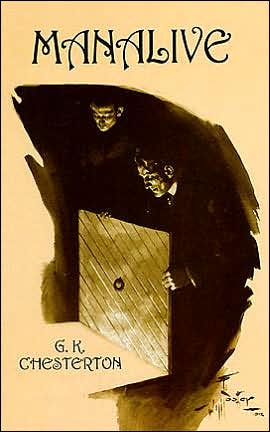
In Chesterton's sometimes shocking--but altogether humorous and enthralling--novel, Manalive, we meet a man called Innocent Smith. A man who enters the pages like the great "wind that [sprang] high in the west, like a wave of unreasonable happiness." He thrusts himself upon the lives of several boarders in a boarding house and no one is the same again. "In a million holes and corners it refreshed a man like a flagon, and astonished him like a blow. In the inmost chambers of intricate and embowered houses it woke like a domestic explosion."


Innocent Smith is that explosion. He shatters the laws of convention, but never breaks the Law. Instead, he turns everything on its head. He sees the world with awe and innocence. He travels round the world, just so he might come home again. After all, is not "home" really the destination of all our travels? Do we not always wish that we might come home again?


Why can't we all be Innocent Smiths in the world? Why can't we all embrace that vibrant Chestertonian (which is actually a quite Christian) view of the world? And what is this view but to appreciate the life that God has given us. Innocent Smith has a strange hobby of threatening pessimistic professors with guns. When one professor says that men would be better off dead, Innocent quickly replies that he will help by shooting him. Of course, he never does: it is merely a ploy to show the professor how precious life truly is. And eventually he gets the professor to renounce all his previous ideas and see the world as Smith sees it.


Sometimes people can be too grave, too solemn, too serious. This is exactly what C. S. Lewis condemned in An Experiment in Criticism. He speaks of how we have raised up "a breed of young men as solemn as the brutes." He goes on to point out how such a class can't possibly enjoy literature or know the meaning and intent of what they read; I wonder how they can even enjoy life or know what their meaning and purpose in life is.


For how can we be solemn and bleak, when we are praising God? Death has been conquered. We are sharers in everlasting life.


Philippians 2: 14-16


Do everything without complaining or arguing, so that you may become blameless and pure, children of God without fault in a crooked and depraved generation, in which you shine like stars in the universe as you hold out the word of life.


How can we be shining stars when we appear like everyone else? But when we smile, when we are kind, when we love life, when we love God and praise Him for all He has done, when we "glorify God and enjoy him forever," then we shall be stars. We will no longer blend into the dark of night: we will stand out, shimmering in a light that cannot be hidden.


In many ways, Manalive cannot be taken entirely seriously. We are not to threaten professors with guns, break into our own houses, journey round the world, but we are to see life as Smith sees it.


"But, manalive!" began Inglewood in exasperation.
"That's right! That's right!" came with a roar out of the rocking tree; "that's my real name." And he broke a branch, and one or two autumn leaves fluttered away across the moon.


We are manalive as well. No longer are we dead. Sometimes we forget that. We forget all that God has done for us and all that He is. Let us pray that this does not happen often, because it is too great a thing to be forgotten. It is our very life.


Ephesians 2: 4-5


But because of his great love for us, God, who is rich in mercy, made us alive with Christ even when we were dead in transgressions--it is by grace you have been saved.


The American Chesterton Society has an essay on their site about Manalive. It concludes:


So, is Innocent Smith really G.K. Chesterton? Well, let me say this: this novel is Chesterton’s most practical and least theoretical book. This is the book on how to live Chesterton. I have found that people either love this book or are neutral about it. There is no hating it. And if you are neutral about it, well, you need to go have a picnic on the roof.

Labels: ,

Posted by Nicole Bianchi at 10:13 PM |

Related Posts with Thumbnails