Thursday, November 25, 2010

Happy Thanksgiving!

"God gave you a gift of 86,400 seconds today. Have you used one to say 'thank you?'" 
-- William A. Ward


Psalm 100. A Psalm for Giving Grateful Praise.

Shout for joy to the LORD, all the earth.
Worship the LORD with gladness;
come before him with joyful songs.
Know that the LORD is God.
It is he who made us, and we are his;
we are his people, the sheep of his pasture.

Enter his gates with thanksgiving
and his courts with praise;
give thanks to him and praise his name.
For the LORD is good and his love endures forever;
his faithfulness continues through all generations.

Have a blessed Thanksgiving with family and friends!

Labels: ,

Posted by Nicole Bianchi at 4:46 PM |

Monday, November 22, 2010

New York City's Poetry

Musings from a poetry reading hosted by First Things magazine and featuring the poetry of Christian Wiman, editor of Poetry magazine.

I am seated in a small, crowded room on the sixth floor of a building on New York City’s East Side. It is my first time at a poetry reading. Initially, I feel out of place. I am younger than most here – too young even to drink the wine. But I find several familiar faces in the crowd. I realize that all in this room are united by a love for words and especially for poetry.

Christian Wiman, a native of west Texas, came to the city to share his poetry. He laughs, almost apologetically, when admitting that most of the poems are about Texas. But I am fascinated by the way his voice (with a hint of a Texan drawl) lifts words from the page and paints pictures of fields that “wrinkle into rows / of cotton” and dust devils that are a “mystical hysterical amalgam of earth and wind / and mind.”

Leaning forward in my chair to catch the words as they slip past, I wish for pen and paper to write down several of the lines. Wiman knows these poems by heart and does not think to allow a long pause between each reading to let his listeners ponder the graceful phrases.

There is one poem that captivates me. He calls it “Postolka,” the Czech word for kestrel. During a stay in Prague, he saw a falcon land on his windowsill. The poem recounts the moment: “Wish for something, you said. / A shiver pricked your spine. / The falcon turned its head 
/ and locked its eyes on mine.” I love the way I suddenly feel transported to that room. I can feel the eager anticipation pulsing through my body, and the wonder that such a large bird, loose in a city, would choose my windowsill on which to alight. What would I do in this room if I saw a falcon dive through the night air and perch on the fire escape to stare at me?

I am reminded of a passage from Mystery and Manners, a book of essays by Flannery O’Connor. O’Connor encourages writers to take up painting because it forces them to see. This is the basis of all the arts, she argues. Writing is not concerned with just saying things, but showing things. I do not know if Wiman has read O’Connor, but he has surely taken this advice to heart. His poetry is charged by a peculiar clarity of vision that creates honestly detailed portrayals of everyday life. The poems possess all the color and beauty of a photograph. And, yet, they are much more alive than a photograph: they allow a glimpse into Wiman’s mind and transcribe into words the vibrant glow of his soul.

That glow seems to fill the room, subduing his listeners into an awestruck silence or stirring them to applause. We applaud when his words inspire and encourage the glow within our own souls.

When I leave the poetry reading, I am refreshed and renewed. I find myself on the sidewalk in the cool of an October evening. But the city seems different than before, as though I see it with new eyes. I long to draw my own lines of poetry – to capture the emotions welling up in my soul and somehow offer them up to this big city.

Labels: , , ,

Posted by Nicole Bianchi at 12:39 PM |

Saturday, October 06, 2007

Poem in October by Dylan Thomas

[This is one of those poems that makes you catch your breath -- it's beautifully rich with imagery. I took the pictures last October at Rockefeller State Park here in New York. Enjoy!]


It was my thirtieth year to heaven
Woke to my hearing from harbour and neighbour wood
    And the mussel pooled and the heron
            Priested shore
        The morning beckon
With water praying and call of seagull and rook
And the knock of sailing boats on the net webbed wall
        Myself to set foot
            That second
In the still sleeping town and set forth.

    My birthday began with the water-
Birds and the birds of the winged trees flying my name
    Above the farms and the white horses
            And I rose
        In rainy autumn
And walked abroad in a shower of all my days.
High tide and the heron dived when I took the road
        Over the border
            And the gates
Of the town closed as the town awoke.

    A springful of larks in a rolling
Cloud and the roadside bushes brimming with whistling
    Blackbirds and the sun of October
            Summery
        On the hill's shoulder,
Here were fond climates and sweet singers suddenly
Come in the morning where I wandered and listened
        To the rain wringing
            Wind blow cold
In the wood faraway under me.

    Pale rain over the dwindling harbour
And over the sea wet church the size of a snail
    With its horns through mist and the castle
            Brown as owls
        But all the gardens
Of spring and summer were blooming in the tall tales
Beyond the border and under the lark full cloud.
        There could I marvel
            My birthday
Away but the weather turned around.

    It turned away from the blithe country
And down the other air and the blue altered sky
    Streamed again a wonder of summer
            With apples
        Pears and red currants
And I saw in the turning so clearly a child's
Forgotten mornings when he walked with his mother
        Through the parables
            Of sun light
And the legends of the green chapels

    And the twice told fields of infancy
That his tears burned my cheeks and his heart moved in mine.
    These were the woods the river and sea
            Where a boy
        In the listening
Summertime of the dead whispered the truth of his joy
To the trees and the stones and the fish in the tide.
        And the mystery
            Sang alive
Still in the water and singingbirds.

    And there could I marvel my birthday
Away but the weather turned around. And the true
    Joy of the long dead child sang burning
            In the sun.
        It was my thirtieth
Year to heaven stood there then in the summer noon
Though the town below lay leaved with October blood.
        O may my heart's truth
            Still be sung
On this high hill in a year's turning.


Labels:

Posted by Nicole Bianchi at 2:42 PM |

Friday, July 20, 2007

I'm back!

Whew, now I have about a month to actually enjoy my summer. Haha, yes, I'm joking -- I have been enjoying it very much. But now I'll actually have time to read.

I will have some more essays up here soon, but right now I have to post this poem. It's amazing. Enjoy!

Marginalia
By
Billy Collins

Sometimes the notes are ferocious,
skirmishes against the author
raging along the borders of every page
in tiny black script.
If I could just get my hands on you,
Kierkegaard, or Conor Cruise O'Brien,
they seem to say,
I would bolt the door and beat some logic into your head.

Other comments are more offhand, dismissive -
"Nonsense." "Please!" "HA!!" -
that kind of thing.
I remember once looking up from my reading,
my thumb as a bookmark,
trying to imagine what the person must look like
why wrote "Don't be a ninny"
alongside a paragraph in The Life of Emily Dickinson.

Students are more modest
needing to leave only their splayed footprints
along the shore of the page.
One scrawls "Metaphor" next to a stanza of Eliot's.
Another notes the presence of "Irony"
fifty times outside the paragraphs of A Modest Proposal.

Or they are fans who cheer from the empty bleachers,
Hands cupped around their mouths.
"Absolutely," they shout
to Duns Scotus and James Baldwin.
"Yes." "Bull's-eye." "My man!"
Check marks, asterisks, and exclamation points
rain down along the sidelines.

And if you have managed to graduate from college
without ever having written "Man vs. Nature"
in a margin, perhaps now
is the time to take one step forward.

We have all seized the white perimeter as our own
and reached for a pen if only to show
we did not just laze in an armchair turning pages;
we pressed a thought into the wayside,
planted an impression along the verge.

Even Irish monks in their cold scriptoria
jotted along the borders of the Gospels
brief asides about the pains of copying,
a bird signing near their window,
or the sunlight that illuminated their page-
anonymous men catching a ride into the future
on a vessel more lasting than themselves.

And you have not read Joshua Reynolds,
they say, until you have read him
enwreathed with Blake's furious scribbling.

Yet the one I think of most often,
the one that dangles from me like a locket,
was written in the copy of Catcher in the Rye
I borrowed from the local library
one slow, hot summer.
I was just beginning high school then,
reading books on a davenport in my parents' living room,
and I cannot tell you
how vastly my loneliness was deepened,
how poignant and amplified the world before me seemed,
when I found on one page

A few greasy looking smears
and next to them, written in soft pencil-
by a beautiful girl, I could tell,
whom I would never meet-
"Pardon the egg salad stains, but I'm in love."

Labels:

Posted by Nicole Bianchi at 3:16 PM |

Monday, June 04, 2007

More Poetry - The Scholar's Vessel

[I wrote this earlier this year for Brit Lit when we were studying 'concrete poetry.' George Herbert was one of - if not the - masters of the form. Read his poems "The Altar" and "Easter Wings". This is such a cool form to write in. I'd love to read anyone else's attempts at it. :)]

And here's mine:

The Scholar’s Vessel

The
Sails of
My ship catch
The soft spring breeze,
And
I
Glide forward to strange lands and seas,
Bold to sail where ancient minds have pondered,
This ocean a book I freely wander...


Labels: ,

Posted by Nicole Bianchi at 8:50 PM |

Saturday, June 02, 2007

GMH

I posted an essay on here several months ago about Matthew Arnold and his atheistic worldview in "Dover Beach." Then, I decided to re-write the essay for another class, pitting Arnold's nihilistic philosophy against Gerard Manley Hopkins' Christian one. You can read the original essay here. Below are several of the paragraphs I added (this is mostly an excuse to ramble over Hopkins and post some of his wonderful poetry):

Unlike Arnold, Hopkins begins his poem “God’s Grandeur” with the line “The world is charged with the grandeur of God” (1), immediately affirming the presence of a Creator. Of this presence he writes, “It will flame out like shining from shook foil” and “it gathers to a greatness” (2-3). Like Arnold, however, Hopkins had also experienced uncertainty and doubt concerning religion. Yet, he overcame this, converting to Catholicism in 1866 and going on to become a Jesuit priest. This sudden conversion made him focus entirely on his Christian vocation. He destroyed all the poems he had previously written and abandoned writing for almost seven years. It was not until after the urging of religious leaders that he decided to embark on poetry once again. It is well that he did, for Hopkins’ writings provide a strong contrast to the nihilistic philosophy of his day, offering the other side of the argument: the argument for a God and His existence in the world.

In “God’s Grandeur,” Hopkins describes poets like Arnold and asks, “Why do men then now not reck his rod?” (4). If there is a god and everyone knows that he exists (even Arnold admitted a knowledge of religion), would it not be in their best interest to obey him? He argues further that men like Arnold are living in a delusion of their own making. “And all is seared with trade; bleared, smeared with toil; / And wears man's smudge and shares man's smell: the soil / Is bare now, nor can foot feel, being shod” (6-8). Yet, man cannot kill God so easily. Even though man may attempt to destroy Him by destroying the nature He has created (many abuses of nature occurred during the Victorian era perhaps as consequences of the Industrial Revolution), “nature is never spent” (9). There is still hope for man because God does exist and “the Holy Ghost over the bent / World broods with warm breast and with ah! bright wings” (13-14).

During his lifetime, Arnold refused to call himself an atheist, hiding in the supposed comforts of agnosticism, believing in neither the existence nor the nonexistence of God. Yet, he rejected religion as superficial, blinding to true reality. “Dover Beach” may, in fact, be his only writing that conceded religion was an answer to chaos in the world: it was deceptive, but it did offer relief and a feigned security. Yet, Arnold insisted on freeing himself from this self-delusion and wallowing in the despair and darkness of the real world. Nevertheless, Hopkins argues that Arnold has actually thrown away reality for the self-delusion. In the Epistle to the Romans in the Bible, Paul wrote that sinful men “suppress the truth in unrighteousness” (Romans, I.18). Further, “they [become] futile in their speculations, and their foolish hearts [are] darkened. Professing to be wise, they [become] fools” (I.21-22). Arnold believed a world of happiness and peace must be a delusion and embraced what he thought was a reality of misery and horror. Indeed, to the unbeliever it is their reality – a “darkling plain” where fools will fight to reject God and hide from the light and truth. It is this light and truth that Hopkins still offers them in “God’s Grandeur.” For “though the last lights off the black West went / Oh, morning, at the brown brink eastward, springs” (“God’s Grandeur”, 13-14).
And here's some of that wonderful poetry I promised. :) Hopkins used a technique called 'sprung rhythm.' The Victorian Web describes it as term for a complex and very technically involved system of metrics which he derived partly from his knowledge of Welsh poetry. It is opposed specifically to "running" or "common" rhythm, and provides for feet of lengths varying from one syllable to four, with either "rising" or "falling" rhythm.


God's Grandeur

The world is charged with the grandeur of God.
It will flame out, like shining from shook foil;
It gathers to a greatness, like the ooze of oil
Crushed. Why do men then now not reck his rod?
Generations have trod, have trod, have trod;
And all is seared with trade; Bleared, smeared with toil;
And wears man's smudge and shares man's smell: the soil
Is bare now, nor can foot feel, being shod.

And for all this, nature is never spent;
There lives the dearest freshness deep down things;
And though the last lights off the black West went
Oh, morning, at the brown brink eastward, springs--
Because the Holy Ghost over the bent
World broods with warm breast and with ah! bright wings.

Spring

Nothing is so beautiful as Spring—
When weeds, in wheels, shoot long and lovely and lush ;
Thrush’s eggs look little low heavens, and thrush
Through the echoing timber does so rinse and wring
The ear, it strikes like lightnings to hear him sing ;
The glassy peartree leaves and blooms, they brush
The descending blue ; that blue is all in a rush
With richness ; the racing lambs too have fair their fling.
What is all this juice and all this joy ?
A strain of the earth’s sweet being in the beginning
In Eden garden.—Have, get, before it cloy,
Before it cloud, Christ, lord, and sour with sinning,
Innocent mind and Mayday in girl and boy,
Most, O maid’s child, thy choice and worthy the winning.

Pied Beauty

Glory be to God for dappled things—
For skies of couple-colour as a brinded cow;
For rose-moles all in stipple upon trout that swim;
Fresh-firecoal chestnut-falls; finches' wings;
Landscape plotted and pieced—fold, fallow, and plough;
And áll trádes, their gear and tackle and trim.

All things counter, original, spare, strange;
Whatever is fickle, freckled (who knows how?)
With swift, slow; sweet, sour; adazzle, dim;
He fathers-forth whose beauty is past change:
Praise him.

Go here for more:

http://www.poetsgraves.co.uk/hopkins.htm

http://www.victorianweb.org/authors/hopkins/gmhov.html


Labels: ,

Posted by Nicole Bianchi at 10:24 PM |

Monday, April 02, 2007

Home Thoughts, from Abroad

O, TO be in England
Now that April 's there,
And whoever wakes in England
Sees, some morning, unaware,
That the lowest boughs and the brushwood sheaf
Round the elm-tree bole are in tiny leaf,
While the chaffinch sings on the orchard bough
In England—now!

And after April, when May follows,
And the whitethroat builds, and all the swallows!
Hark, where my blossom'd pear-tree in the hedge
Leans to the field and scatters on the clover
Blossoms and dewdrops—at the bent spray's edge—
That's the wise thrush; he sings each song twice over,
Lest you should think he never could recapture
The first fine careless rapture!
And though the fields look rough with hoary dew,
All will be gay when noontide wakes anew
The buttercups, the little children's dower
—Far brighter than this gaudy melon-flower!

Robert Browning

Labels:

Posted by Nicole Bianchi at 10:46 PM |

Tuesday, January 30, 2007

The Darkling Plain

[An Explication of Matthew Arnold’s "Dover Beach"]


The sea is calm to-night.
The tide is full, the moon lies fair
Upon the straits; on the French coast the light
Gleams and is gone; the cliffs of England stand;
Glimmering and vast, out in the tranquil bay.
Come to the window, sweet is the night-air!
Only, from the long line of spray
Where the sea meets the moon-blanched land,
Listen! you hear the grating roar
Of pebbles which the waves draw back, and fling,
At their return, up the high strand,
Begin, and cease, and then again begin,
With tremulous cadence slow, and bring
The eternal note of sadness in.

Sophocles long ago
Heard it on the Ægean, and it brought
Into his mind the turbid ebb and flow
Of human misery; we
Find also in the sound a thought,
Hearing it by this distant northern sea.

The Sea of Faith
Was once, too, at the full, and round earth's shore
Lay like the folds of a bright girdle furled.
But now I only hear
Its melancholy, long, withdrawing roar,
Retreating, to the breath
Of the night-wind, down the vast edges drear
And naked shingles of the world.

Ah, love, let us be true
To one another! for the world, which seems
To lie before us like a land of dreams,
So various, so beautiful, so new,
Hath really neither joy, nor love, nor light,
Nor certitude, nor peace, nor help for pain;
And we are here as on a darkling plain
Swept with confused alarms of struggle and flight,
Where ignorant armies clash by night.


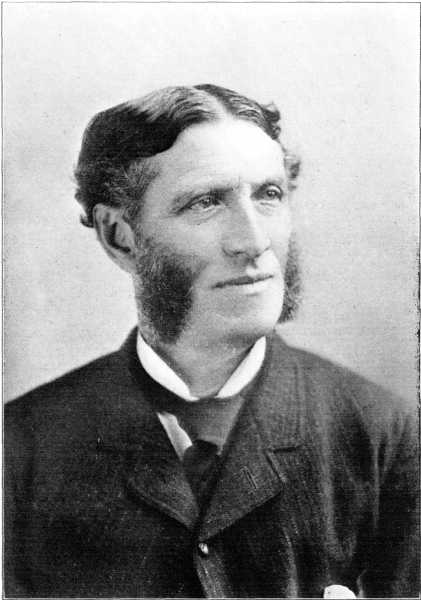
During his honeymoon in 1851, Matthew Arnold visited Dover, England. As he strolled along the beach with his wife, he probably paused to listen to the roar of the English Channel, its waves driven wildly against the shore, or to stare up at the vast white chalk cliffs dominating the coastline. This visit would later serve as inspiration for his poem “Dover Beach.” The poem describes a man’s personal loss of faith, exemplifying the contrast between a time when religion was embraced without question and the modern Victorian age that introduced doubt and atheism.

Arnold believed that his poems would eventually “have their day” because they represented “the main movement of mind” of the Victorian world. Although certainly one of the reasons why he gained prominence, Arnold was also a masterful poet, able to create striking pictures with words. “Dover Beach” begins with such a picture of the calm sea, “the tide is full, the moon lies fair / upon the straits” and “the cliffs of England stand, / Glimmering and vast, out in the tranquil bay” (“Dover Beach”, 2-5). It is not only a picture of Dover, however, but of the whole of England. The British Empire had its height in the Victorian age. England, glorious and powerful, dominated much of the world. Yet in this peaceful scene, suddenly, a “grating roar” is heard “of pebbles which the waves draw back, and fling, / at their return, up the high strand” (10-11). The tranquility of the night has been disturbed by this wild noise: the pebbles symbolize new opinions (for instance, Darwin’s theories on evolution) that are flooding the philosophical spectrum and undermining the Christian worldview. Arnold does not question their veracity, but he admits that they bring “the eternal note of sadness in” (14).

This sound is not new to England, however. Arnold describes Sophocles also hearing it long ago on the Ægean, referring to a passage from Antigone. It is the sound of “human misery” (18), the constant war of differing thoughts and opinions that occurs in any age, country, or culture. Arnold believes nature can be used to discover truths about the world and the sea gives him, like Sophocles, a “thought” (19) that tries to solve this war in his mind. Yet it can hardly offer him a solution. Instead, it reminds Arnold of religion and he compares the real sea to “The Sea of Faith” (21).

This Sea, unlike the sea of nature, can offer man satisfaction for the turmoil in his soul. Indeed, once “at the full, and round earth’s shore” it “lay like the folds of a bright girdle furl’d” (22-23). It is unclear here whether Arnold is referring to a time period (such as the medieval age) or simply to a previous time in his life when Christianity was accepted with absolute conviction and no uncertainty. Whichever the case, when it was accepted, his life did not experience such dark sadness and fear. As he watches his religious beliefs shattered by the new beliefs of the day (beliefs that question the existence of God and the origins of man), he can only hear The Sea of Faith’s “melancholy, long, withdrawing roar, / Retreating, to the breath / Of the night-wind” (25-27). Without Christianity, the world is left naked and forbidding.

Arnold argues, however, that The Sea of Faith was actually a delusion. In reality, the world has “really neither joy, nor love, nor light, / nor certitude, nor peace, nor help for pain” (32-33). Because Christianity offered these things to Arnold, it must have been false. Arnold has become a nihilist. According to the Merriam Webster dictionary, nihilism is a viewpoint that “traditional values and beliefs are unfounded and that existence is senseless and useless,” denying “any objective ground of truth and especially of moral truths.” He has no way to decide between the warring philosophies because there is no ultimate standard to judge them against. Searching wildly for a solution to this dilemma, Arnold insists on crying out to his “love” (though in the next breath he denounces any love in the world), declaring, “let us be true / to one another!” (29-30). But how can they be true when there is no truth in the world? How can they love one another when love is only a delusion?

No answer is found for these questions. He ends the poem on a note of sorrow, unable to resolve the turmoil in his soul. Instead, he describes himself as on a “darkling plain / Swept with confused alarms of struggle and flight, / Where ignorant armies clash by night” (35-37). For the nihilist, the world is in a constant state of war. Fear and despair are its only realities. Arnold seeks desperately to find a shred of happiness that is not a fantasy, but this fights against his own philosophy. Vainly, he attempts to create a substitution for the relationship between God and man, appealing to his fellow man for help. “Let us be true!” he begs, but they have nothing to guide them, no foundation on which to protect such a relationship – the world is hostile, religion is dead, and nature can give them no answers.

Arnold refused to call himself an atheist, hiding in the supposed comforts of agnosticism, refusing to believe in either the existence or the nonexistence of God. Yet, he rejected religion as superficial, blinding to true reality. “Dover Beach” may, in fact, be his only writing that conceded religion was an answer to chaos in the world: it was deceptive, but it did offer relief and a feigned security. However, Arnold insisted on freeing himself from this self-delusion and wallowing in the despair and darkness of the real world. Nevertheless, the Bible is clear that Arnold has actually thrown away reality for the self-delusion. In Romans, Paul wrote that sinful men “suppress the truth in unrighteousness” (Romans, I.18). Further, “they [become] futile in their speculations, and their foolish hearts [are] darkened. Professing to be wise, they [become] fools” (I.21-22). Arnold believed a world of happiness and peace must be a delusion and embraced what he thought was a reality of misery and horror. Indeed, to the unbeliever it is their reality – a “darkling plain” where fools will fight to reject God and hide from the light and truth.

Labels: , ,

Posted by Nicole Bianchi at 8:39 PM |

Saturday, January 13, 2007

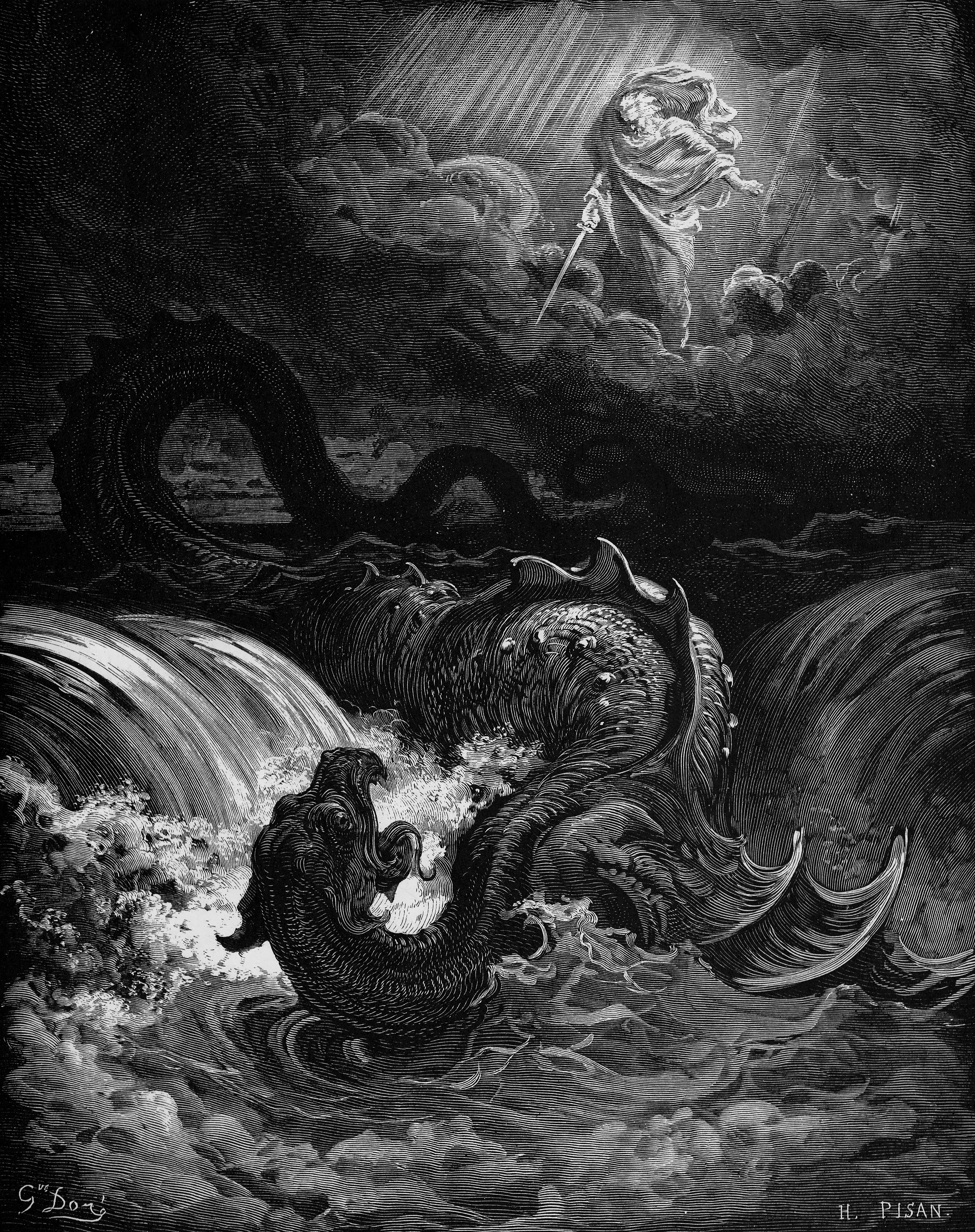
Lucifer's Fall

[I wrote this poem several weeks ago after studying poetry in my Brit Lit class. It's in the style of a Shakespearean Sonnet and was inspired by John Milton's Paradise Lost and texts from Isaiah and Revelation.]

Isaiah 14:12

How you have fallen from heaven,
O morning star, son of the dawn!
You have been cast down to the earth,
you who once laid low the nations!


Fallen art thou, son of the bright flamed morn,
With thy dragon’s black tail swept down the stars,
Burning, blazing, blaring into Hell born,
Never to ride skyward after these wars.
Why did thou forsake lofty light-realms to
Perish in a cursed tract of Hades?
And why strive vain against Him always true,
Baring thine heart to this wild disease?
Curséd art thou of all His creatures made,
For once thou strike the heel of His blessed Son –
Arise, Firstborn! And let all be afraid,
Heavens quake until victory is won.
This foul false serpent crush under Thy feet,
Lucifer Hell-chained in final defeat.

Labels: ,

Posted by Nicole Bianchi at 1:12 PM |

Thursday, September 08, 2005

wordsworth on bede

BUT what if One, through grove or flowery mead,
Indulging thus at will the creeping feet
Of a voluptuous indolence, should meet
Thy hovering Shade, O venerable Bede!
The saint, the scholar, from a circle freed
Of toil stupendous, in a hallowed seat
Of learning, where thou heard'st the billows beat
On a wild coast, rough monitors to feed
Perpetual industry. Sublime Recluse!
The recreant soul, that dares to shun the debt
Imposed on human kind, must first forget
Thy diligence, thy unrelaxing use
Of a long life; and, in the hour of death,
The last dear service of thy passing breath!

We're reading Bede in GB3...wonderful stuff...

Labels: ,

Posted by Nicole Bianchi at 10:10 AM |

Related Posts with Thumbnails