Thursday, December 03, 2009

"And all shall be well..."

An explication of T. S. Eliot's "Little Gidding"

Modernism professed that man was living in a post-Enlightenment era. It emphasized a bleak disillusionment for the things of the world. The Enlightenment philosophy had taught that man was progressing and would eventually be able to solve all the world’s problems. Yet the horror and carnage of two world wars revealed that this progress had lead to technology with the ability to take rather than prolong human life. The wars struck a blow to the belief in the superiority of Western civilization and destroyed any idea of the innate goodness of man.

T. S. Eliot’s (1888-1965) early poetry, especially The Waste Land and “The Hollow Men”, stood at the forefront of the Modernist movement, powerfully developing the deep darkness and despair of Modernistic thought. Indeed, he had often been hailed as the defining poet of the Modernist literary movement. Yet, in order for him to claim this title, a very important event in his life must be overlooked – his conversion to Christianity in 1927. His exploration of Modernistic thought was only his search for an answer to all the despair and hopelessness of mankind’s fallen condition. Indeed, it was not until after his conversion to Christianity that he reached the pinnacle of his poetic height in the most overtly Christian of all his poems – “Little Gidding.” The poem sets at odds the redemptive power of the Holy Spirit and the destructive power of man, following the outline of Dante’s Divine Comedy – the hopelessness of the Inferno (a world without God), the refining fires of Purgatorio (the journey to an understanding and faith in Christ), and, finally, the glorious eternal communion with God in Paradiso.

“Little Gidding” is the last in a series of a poems from T. S. Eliot’s Four Quartets. Though the poems act as a unified whole, each symbolizing a movement in a musical piece, it is possible to read them individually. This particular poem draws its name from a small village in Huntingdonshire where T. S. Eliot served as an air-raid warden during World War II. It opens on a scene in “midwinter spring” when “the brief sun flames the ice” and “there is no earth smell / Or smell of living thing” (1, 5, 12-13). Though filled with a sense of despair, there is a small glimmer of hope charged through these images. The speaker of the poem has not come without purpose to this village, but, rather, “You are here to kneel / Where prayer has been valid” (45-46). It is necessary to descend before he can ascend. In the beginning of The Divine Comedy, Dante attempted to reach heaven by simply climbing a steep hill out of the darkness into the light of heaven, but found it impossible. Instead, he had to journey back into the darkness and into the deepest darkness of all: the center of Hell. Dante had to realize fully his sinful state, dying to sin before he could be reborn in Christ. The first part of “Little Gidding” is a picture of Hell, a world removed from the light of God. T. S. Eliot describes what the village was like during the Blitz bombings, using “the dark dove with the flickering tongue” (the German dive bomber) as a symbol of all this desolation and hopelessness, the source of the destruction. After the houses were bombed, the ash would linger in the air for hours, covering people and their clothing,
Ash on an old man’s sleeve
Is all the ash the burnt roses leave.
Dust in the air suspended
Marks the place where a story ended. (54-57)
With this background of Hell, Eliot continues to follow the pattern of Dante, evoking a type of image from The Inferno. Indeed, lines 78 to 149 have been considered as near to Dante's terza rima form as is possible in English. In The Inferno, Dante met the shades of many of the dead, who would stop to offer him some word of warning. After a bombing in Eliot’s poem, the narrator seems to see a ghost hurrying past him, who stops to talk with him. In all of this darkness and devastation, he summarizes the Modernist view of death.
First, the cold friction of expiring sense
Without enchantment, offering no promise
But bitter tastelessness of shadow fruit as body and soul begin to fall asunder.
[…]
And last, the rending pain of re-enactment
Of all that you have done, and been; the shame
Of things ill done and done to others’ harm. (131-141)
The Modernist has no hope in his future afterlife – there are no answers to all his previous mistakes. Actually, he can look forward to nothing. Man is sinful and unable to perfect himself. He cannot stop the destruction on this earth. But there is another answer. “From wrong to wrong the exasperated spirit / Proceeds, unless restored by that refining fire / Where you must move in measure, like a dancer” (144-146). On these words, the ghost disappears.

Purgatorio followed Dante’s journey through the Catholic Purgatory, the spiritual realm where man was purified from his sin after death. Eliot evokes this with these words of a “refining fire.” He writes,
What they had to leave us—a symbol
A symbol perfected in death.
And all shall be well....
By the purification of the motive
In the ground of our beseeching (194-199).
Purification does not happen over night. It is a gradual process, a journey – just as one must come to the deepest understanding of his depraved condition before he can travel upward to the light. Augustine, one of the early Church fathers, wrote The City of God, in which he described two different cities: that of man and that of God. Eliot uses this type of imagery in this part of the poem, exclaiming,
The dove descending breaks the air
With flame of incandescent terror
Of which the tongues declare
The one discharge from sin and error.
The only hope, or else despair
Lies in the choice of pyre of pyre—
To be redeemed from fire by fire (200-206).
In these lines, Eliot pits the symbols of the “dark dove” (the German plane) against the “dove descending” (the Holy Spirit). Man can either experience hope in the refining fire of the Holy Spirit or despair in the dark dove’s destruction. Yet, he admits that this is not always an easy decision. Being refined sometimes can be a “torment” (207). Both decisions are a fire, but the former is the only one that can lead to ultimate peace and happiness. At last, Eliot begins to build to the culmination of his poem,
With the drawing of this Love and the voice of this Calling
We shall not cease from exploration
And the end of all our exploring
Will be to arrive where we started
And know the place for the first time (238-242).
When man is refined, his eyes are opened and he sees the world as if for the first time. The destruction around him can be fitted into the larger picture of God’s perfect plan. He knows that this not the end of everything for in the end “all shall be well and / All manner of thing shall be well” (255-256). There will be perfect unity and perfect peace.
When the tongues of flame are in-folded
Into the crowned knot of fire
And the fire and the rose are one (257-259).
The ‘rose’ was the greatest image in Dante’s Paradiso. It was made of circles and circles, tiers on tiers of the Saints. He described it as “the rose that blooms eternal, rank on rank, in incense of praise it sends up to the Sun forever vernal.” Ultimately, it was a symbol of the eternal communion of God and man.

In “Little Gidding,” T. S. Eliot described the spiritual journey in passionate and stirring terms. To classify him as a Modernist poet when he offers such hope to the world is a terrible error. Many writers of literary criticism will go so far to classify even this poem as an example of Modernist thought. While the first half does over a bleak view of the world, the poem hardly ends there. Yet, it is true that in a world devoid of God, Modernism is indeed the only answer. There can be no hope, no peace, and no love without a God ordering and controlling the universe. History will spin out of control with no point and no purpose. The dark dove will continue its desolation with no one to stop him. Unless man is burned by “the flame of incandescent terror,” he will continue to live in a wasteland, unable to see the world with new eyes and a new soul and say from the depths of his heart, “And all shall be well.”

Works Cited

Eliot, T. S. “Little Gidding.” 1943. The Norton Anthology of English Literature: The Major Authors. Stephen Greenblatt, General Editor. 8th edition. New York: W. W. Norton & Company, Inc., 2006, pgs. 2507-2534.

Labels: , , ,

Posted by Nicole Bianchi at 1:16 PM |

Friday, May 25, 2007

The Deep Heart's Core

The Theme of Alienation in 20th Century Irish Literature

Read "The Dead" here and "Lake Isle of Innisfree" here.


The twentieth century saw a new modernist strain in literature. Among its various characteristics, Modernism emphasized the alienation of certain individuals within an industrialized, urban world. While unique in certain aspects, this feature was merely an extension of its predecessor Romanticism. This earlier philosophy had developed the idea of the noble savage – how man is sinless at birth, but gradually the industrialized world corrupts him. Only in Nature can man remain perfect. In “The Dead,” James Joyce explores the effects of urbanization upon an individual; conversely, William Butler Yeats in his poem “The Lake Isle of Innisfree” contrasts how a return to Nature can essentially purify and restore peace to a person’s soul.

Famed for his complex character studies and utilization of the stream-of-consciousness technique, Joyce is one of the most famous writers of the Modernist era and of Ireland. His collection of short stories, The Dubliners, displays his immense talent. “The Dead” is the last story in this collection and perhaps the most famous and the most powerful. The main character is a young married man, Gabriel, who struggles with his identity as an Irishman during that country’s political upheavals. At a dinner party, one of the guests invites him to visit the Aran Isles on the west coast of Ireland. Gabriel protests that he would rather go to France or Germany and then admits in an outburst of passion, “To tell you the truth….I’m sick of my own country, sick of it!” (2515). His disgust for his homeland, however, stems from his disconnection with his Irish heritage, rather than a true dissatisfaction with the country. Indeed, his answer was provoked after the dinner guest had exclaimed, “And haven’t you your own land to visit….that you know nothing of, your own people, and your own country?” (2515). Later on, Gabriel continues to evince his anger over the loss of his heritage by declaring in his speech,

But we are living in a skeptical and, if I may use the phrase, a thought-tormented age: and sometimes I fear that this new generation, educated or hypereducated as it is, will lack those qualities of humanity, of hospitality, of kindly humor which belonged to an older day” (2523).


The Irish heritage primarily centered on the importance of the land, for the Irish had always been farmers. By living in the city of Dublin, Gabriel is alienated from the real Ireland of lush green fields and rolling hills. His schooling has drowned him in the intellectual and philosophical thought of his age, but has given him nothing of his own culture to hold onto. The tension grows when one of the guests begins to sing an old Irish song, awakening strange passions within Gabriel. He knows that the song has some sort of symbolic meaning, but he cannot quite discern what it is. After returning home, his wife begins to tell him of a boy she had known long ago who used to sing the same song to her: a country boy who died of love for her. As he listens to his wife’s story, he suddenly realizes that he has never truly loved her before – he realizes the wall that seems to stand between him and her, between him and the old Ireland.

His own identity was fading out into a grey impalpable world: the solid world itself which these dead had one time reared and lived in was dissolving and dwindling (2534).


The country boy symbolizes the purity of Nature, the purity of the true, old Ireland. Gabriel is the new Ireland, oppressed by British rule and raising children who know only of the present urbanization. This last quote shows that Gabriel has no identity in this urban world and no one ever can. Only in that old Ireland could the qualities of humanity and kindly humor exist; only in that old Ireland could he have truly loved his wife as the country boy did.

Romanticism probably influenced Yeats more than it did Joyce. Indeed, Yeats drew his poetic inspiration from Shelley and Blake, even editing several of Blake’s poems. “The Lake Isle of Innisfree” (Innisfree is a small island in western Ireland) almost seems like a tribute to these earlier writers with its idyllic atmosphere. It describes a person in either a town or city, yearning to “arise and go /…to Innisfree” (1). The person of the poem is not alienated from Nature like Gabriel, however, but rather he is alienated from the city where he lives. The reason why he decides to return to Nature is because he cannot escape from it.


I will arise and go now, for always night and day
I hear lake water lapping with low sounds by the shore;
While I stand on the roadway, or on the pavements grey,
I hear it in the deep heart’s core (9-12).


Gabriel was faced with a similar dilemma in “The Dead.” He also was constantly haunted by this sound “in the deep heart’s core” but he decided that there was no solution to his problem. Gradually, this old world of Nature would fade away and people would be left hopeless and in despair. Yeats, however, still shares a glimmer of hope. Nature is not destroyed and there are still places that will welcome the solitary traveler, places like Innisfree and Gabriel’s Aran Isles. Just as Gabriel had drawn the conclusion that only in the old Ireland could he have truly loved his wife, so the speaker in this poem declares that he can only find peace in Innisfree, “for peace comes dropping slow, / Dropping from the veils of the morning to where the cricket sings” (5-6). But his peace is truly tangible for his Innisfree exists whereas Gabriel’s old Ireland did not.

The word ‘alienation’ often has bad connotations, but the Merriam Webster dictionary defines it simply as “a withdrawing of a person's affections from an object or position of former attachment.” Romanticism showed that there were two types of alienation in mankind, one that was bad and the other good, and no middle ground in between. The Modernists delved even more deeply into these themes, oftentimes reaching very different conclusions as Joyce and Yeats did. To many, the past was lost and irrecoverable. Like Gabriel, they could only picture themselves as shadowy ghosts living in a world merely the faint outline of its lost glory. But others, like Yeats, still rejoiced in the hope that was offered to them – for the beauty and peace of Nature could never fade as long as it abided in the “deep heart’s core.”

Works Cited

Joyce, James. “The Dead.” 1914. The Norton Anthology of English Literature: The Major Authors. Stephen Greenblatt, General Editor. 8th edition. New York: W. W. Norton & Company, Inc., 2006, pgs. 2507-2534.

Yeat, William Butler. “The Lake Isle of Innisfree.” 1890. The Norton Anthology of English Literature: The Major Authors. Stephen Greenblatt, General Editor. 8th edition. New York: W. W. Norton & Company, Inc., 2006, pg. 2391.

Labels: , ,

Posted by Nicole Bianchi at 12:02 PM |

Tuesday, January 30, 2007

The Darkling Plain

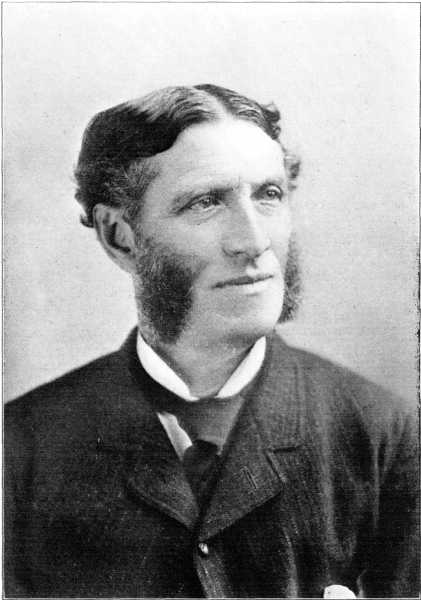
[An Explication of Matthew Arnold’s "Dover Beach"]


The sea is calm to-night.
The tide is full, the moon lies fair
Upon the straits; on the French coast the light
Gleams and is gone; the cliffs of England stand;
Glimmering and vast, out in the tranquil bay.
Come to the window, sweet is the night-air!
Only, from the long line of spray
Where the sea meets the moon-blanched land,
Listen! you hear the grating roar
Of pebbles which the waves draw back, and fling,
At their return, up the high strand,
Begin, and cease, and then again begin,
With tremulous cadence slow, and bring
The eternal note of sadness in.

Sophocles long ago
Heard it on the Ægean, and it brought
Into his mind the turbid ebb and flow
Of human misery; we
Find also in the sound a thought,
Hearing it by this distant northern sea.

The Sea of Faith
Was once, too, at the full, and round earth's shore
Lay like the folds of a bright girdle furled.
But now I only hear
Its melancholy, long, withdrawing roar,
Retreating, to the breath
Of the night-wind, down the vast edges drear
And naked shingles of the world.

Ah, love, let us be true
To one another! for the world, which seems
To lie before us like a land of dreams,
So various, so beautiful, so new,
Hath really neither joy, nor love, nor light,
Nor certitude, nor peace, nor help for pain;
And we are here as on a darkling plain
Swept with confused alarms of struggle and flight,
Where ignorant armies clash by night.


During his honeymoon in 1851, Matthew Arnold visited Dover, England. As he strolled along the beach with his wife, he probably paused to listen to the roar of the English Channel, its waves driven wildly against the shore, or to stare up at the vast white chalk cliffs dominating the coastline. This visit would later serve as inspiration for his poem “Dover Beach.” The poem describes a man’s personal loss of faith, exemplifying the contrast between a time when religion was embraced without question and the modern Victorian age that introduced doubt and atheism.

Arnold believed that his poems would eventually “have their day” because they represented “the main movement of mind” of the Victorian world. Although certainly one of the reasons why he gained prominence, Arnold was also a masterful poet, able to create striking pictures with words. “Dover Beach” begins with such a picture of the calm sea, “the tide is full, the moon lies fair / upon the straits” and “the cliffs of England stand, / Glimmering and vast, out in the tranquil bay” (“Dover Beach”, 2-5). It is not only a picture of Dover, however, but of the whole of England. The British Empire had its height in the Victorian age. England, glorious and powerful, dominated much of the world. Yet in this peaceful scene, suddenly, a “grating roar” is heard “of pebbles which the waves draw back, and fling, / at their return, up the high strand” (10-11). The tranquility of the night has been disturbed by this wild noise: the pebbles symbolize new opinions (for instance, Darwin’s theories on evolution) that are flooding the philosophical spectrum and undermining the Christian worldview. Arnold does not question their veracity, but he admits that they bring “the eternal note of sadness in” (14).

This sound is not new to England, however. Arnold describes Sophocles also hearing it long ago on the Ægean, referring to a passage from Antigone. It is the sound of “human misery” (18), the constant war of differing thoughts and opinions that occurs in any age, country, or culture. Arnold believes nature can be used to discover truths about the world and the sea gives him, like Sophocles, a “thought” (19) that tries to solve this war in his mind. Yet it can hardly offer him a solution. Instead, it reminds Arnold of religion and he compares the real sea to “The Sea of Faith” (21).

This Sea, unlike the sea of nature, can offer man satisfaction for the turmoil in his soul. Indeed, once “at the full, and round earth’s shore” it “lay like the folds of a bright girdle furl’d” (22-23). It is unclear here whether Arnold is referring to a time period (such as the medieval age) or simply to a previous time in his life when Christianity was accepted with absolute conviction and no uncertainty. Whichever the case, when it was accepted, his life did not experience such dark sadness and fear. As he watches his religious beliefs shattered by the new beliefs of the day (beliefs that question the existence of God and the origins of man), he can only hear The Sea of Faith’s “melancholy, long, withdrawing roar, / Retreating, to the breath / Of the night-wind” (25-27). Without Christianity, the world is left naked and forbidding.

Arnold argues, however, that The Sea of Faith was actually a delusion. In reality, the world has “really neither joy, nor love, nor light, / nor certitude, nor peace, nor help for pain” (32-33). Because Christianity offered these things to Arnold, it must have been false. Arnold has become a nihilist. According to the Merriam Webster dictionary, nihilism is a viewpoint that “traditional values and beliefs are unfounded and that existence is senseless and useless,” denying “any objective ground of truth and especially of moral truths.” He has no way to decide between the warring philosophies because there is no ultimate standard to judge them against. Searching wildly for a solution to this dilemma, Arnold insists on crying out to his “love” (though in the next breath he denounces any love in the world), declaring, “let us be true / to one another!” (29-30). But how can they be true when there is no truth in the world? How can they love one another when love is only a delusion?

No answer is found for these questions. He ends the poem on a note of sorrow, unable to resolve the turmoil in his soul. Instead, he describes himself as on a “darkling plain / Swept with confused alarms of struggle and flight, / Where ignorant armies clash by night” (35-37). For the nihilist, the world is in a constant state of war. Fear and despair are its only realities. Arnold seeks desperately to find a shred of happiness that is not a fantasy, but this fights against his own philosophy. Vainly, he attempts to create a substitution for the relationship between God and man, appealing to his fellow man for help. “Let us be true!” he begs, but they have nothing to guide them, no foundation on which to protect such a relationship – the world is hostile, religion is dead, and nature can give them no answers.

Arnold refused to call himself an atheist, hiding in the supposed comforts of agnosticism, refusing to believe in either the existence or the nonexistence of God. Yet, he rejected religion as superficial, blinding to true reality. “Dover Beach” may, in fact, be his only writing that conceded religion was an answer to chaos in the world: it was deceptive, but it did offer relief and a feigned security. However, Arnold insisted on freeing himself from this self-delusion and wallowing in the despair and darkness of the real world. Nevertheless, the Bible is clear that Arnold has actually thrown away reality for the self-delusion. In Romans, Paul wrote that sinful men “suppress the truth in unrighteousness” (Romans, I.18). Further, “they [become] futile in their speculations, and their foolish hearts [are] darkened. Professing to be wise, they [become] fools” (I.21-22). Arnold believed a world of happiness and peace must be a delusion and embraced what he thought was a reality of misery and horror. Indeed, to the unbeliever it is their reality – a “darkling plain” where fools will fight to reject God and hide from the light and truth.

Labels: , ,

Posted by Nicole Bianchi at 8:39 PM |

Thursday, January 11, 2007

A Review of "A Modest Proposal"

[To start my new adventures with this blog, I would like to post an essay I recently wrote for my British Literature class.]

Go here to read "A Modest Proposal."

Swift's Great Satire

Satire has existed as far back as ancient Rome (indeed, tradition says that Quintilian, a Roman rhetorician, coined the term), but it was not until the 18th century that it became a true literary genre. This period saw the emergence of such literary giants as Alexander Pope, John Dryden, and Voltaire, all brilliant satirists. Jonathan Swift (1667-1745) surpassed them all, however, considered by many the greatest prose satirist in the English language. Satire is a literary work that holds up human vices and follies to ridicule or scorn, often employing irony and sarcasm. Swift's short pamphlet “A Modest Proposal” is an excellent example of his superb use of the genre. The piece addresses the Irish famine, attempting to offer a solution for the thousands of starving Irish children. Utilizing three types of persuasion borrowed from Aristotle’s Rhetoric, Swift makes the piece quite convincing, luring the unsuspecting reader to agree with the author’s basic premises before revealing his shocking conclusions – yet, though a satiric seriousness does pervade the work, a true sincerity and earnestness is at the heart of “A Modest Proposal.”

The Irish Famine of 1740 to 1741 refers to the Irish people, rather than Ireland itself. The island was rich with produce and animals; only the crops (mostly potatoes) of the peasant farmers suffered a poor harvest. The English absentee landlords fed off the abundance of the land and starved the Irish citizens to death. One historian, John Mitchell, remarked, “A million and a half men, women and children were carefully and peacefully slain by the English Government. They died of hunger in the midst of abundance, which their own hands created.” Many people wrote pamphlets to expose the ruthlessness of the English and the desperate state of the Irish or to offer different schemes to ease the poverty of thousands and make them useful to the public. With his own satiric pamphlet, Swift joined these writers, employing the first type of Aristotle’s persuasion, “ethos.” Ethos refers to the credibility of the author. By grouping himself with these other writers, Swift shows that he is embarking on a good cause. In the opening title of his piece, he explains that he wishes to prevent the children of Ireland from being a “burden to their parents” and hopes to make them “beneficial to the public” (“A Modest Proposal,” 1114). Not only, however, does he have England in mind, but he also considers the welfare of the children – with his plan they will not want “food and raiment for the rest of their lives” (1114). He also declares that he wishes to end “voluntary abortions” in which women murder their own children (1115). His reasons for his plan at first appear anything but harmful.

To further support the integrity of his schemes, Swift uses the second type of Aristotelian persuasion, “pathos.” Describing the suffering of the Irish in his opening paragraph, he appeals to human emotion, trying to awaken pity and compassion. He calls it a “melancholy object” to walk through Dublin or travel in the countryside and behold the “beggars of the female sex, followed by three, four, or six children, all in rags and importuning every passenger for alms” (1114). When speaking of the mothers who are forced to murder “the poor innocent babes,” he says it is not for shame, but because they cannot provide for their own children; indeed, the very sight of the starving infants would “move tears and pity in the most savage and inhuman breast” (1115). Yet, in the midst of wringing pity from his audience, Swift suddenly reveals his own scheme for allaying the Irish suffering. He announces,

I have been assured by a very knowing American of my acquaintance in London, that a young healthy child well nursed is at a year old a most delicious, nourishing, and wholesome food, whether stewed, roasted, baked, or boiled; and I make no doubt that it will equally serve in a fricassee or a ragout (1114).


Instead of awakening further empathy, his scheme produces disgust. It is this paragraph, however, that makes it readily apparent that Swift’s pamphlet is satiric and he is ridiculing the metaphor, “The English are devouring the Irish.”

Yet, he retains his controlled and grave tone, using the third Aristotelian type of persuasion to support his satire. “Logos” employs logic and outside sources to convince the audience. Swift first appeals to a François Rabelais, a fellow satirist (who he jokingly calls “a grave author” and “eminent French physician”), to prove that his schemes will lessen the Catholic population (1116). Here he parodies the hostility that most English felt against the Papists, especially after the Glorious Revolution that deposed James II and successfully kept Catholics off the throne. Later on in the piece, he also invokes the wisdom of a friend who believes that they might use the children as a substitute for venison meat. Swift casts this plan aside, however, because the meat of older children would probably be tough and lean and some people might think that “such a practice…as a little bordering on cruelty” (1116). The irony of this statement is alarming because Swift’s actual scheme does not simply border on cruelty, but has fallen headfirst into barbarity. Nevertheless, he justifies his friend’s proposal because it was “put into his head by the famous Psalmanazar,” who had written a fictitious book on Formosa and described the selling of plump young girls as food (1117). Swift’s utilization of logos seems to fail with these repulsive examples.

At a deeper level, though, the pamphlet appears to have a very different purpose than offering up Irish children as food for the English. Swift’s Aristotelian persuasion worked perfectly with both ethos and pathos and, at a closer glance, it also works with logos. He convinces the audience of the horrible state of the Irish and the ruthlessness of the English. The English are already devouring the Irish children, already true cannibals. As he draws near the conclusion of his piece, he uses irony to emphasize this, writing that he will not consider other ways to deal with the Irish problem, “of learning to love our country….of quitting our animosities and factions, nor acting any longer like the Jews, who were murdering one another at the very moment their city was taken….of teaching landlords to have at least one degree of mercy towards their tenants” (1118). The pamphlet is a modest proposal for the preservation of a nation on the verge of extermination. He exemplifies his great misery and distress for the Irish people when he tells those who would oppose his schemes to ask the Irish parents,

whether they would not at this day think it a great happiness to have been sold for food, at a year old in the manner I prescribe, and thereby have avoided such a perpetual scene of misfortunes as they have since gone through by the oppression of landlords, the impossibility of paying rent without money or trade, the want of common sustenance, with neither house nor clothes to cover them from the inclemencies of the weather, and the most inevitable prospect of entailing the like or greater miseries upon their breed for ever (1119).


Works Cited:

Swift, Jonathan. “A Modest Proposal.” 1729. The Norton Anthology of English Literature: The Major Authors. Stephen Greenblatt, General Editor. 8th edition. New York: W. W. Norton & Company, Inc., 2006

Labels: , ,

Posted by Nicole Bianchi at 7:49 PM |

Related Posts with Thumbnails